
Reimagining India’s Security Doctrine in an Era of Hybrid and Unconventional Conflict
Abstract: As warfare increasingly expands beyond conventional battlefields into cyber networks, information ecosystems, climate systems, and biological domains, India’s security architecture faces unprecedented challenges. This article examines the emerging contours of hybrid warfare and argues for a comprehensive restructuring of India’s strategic and institutional preparedness.
The Changing Nature of Warfare
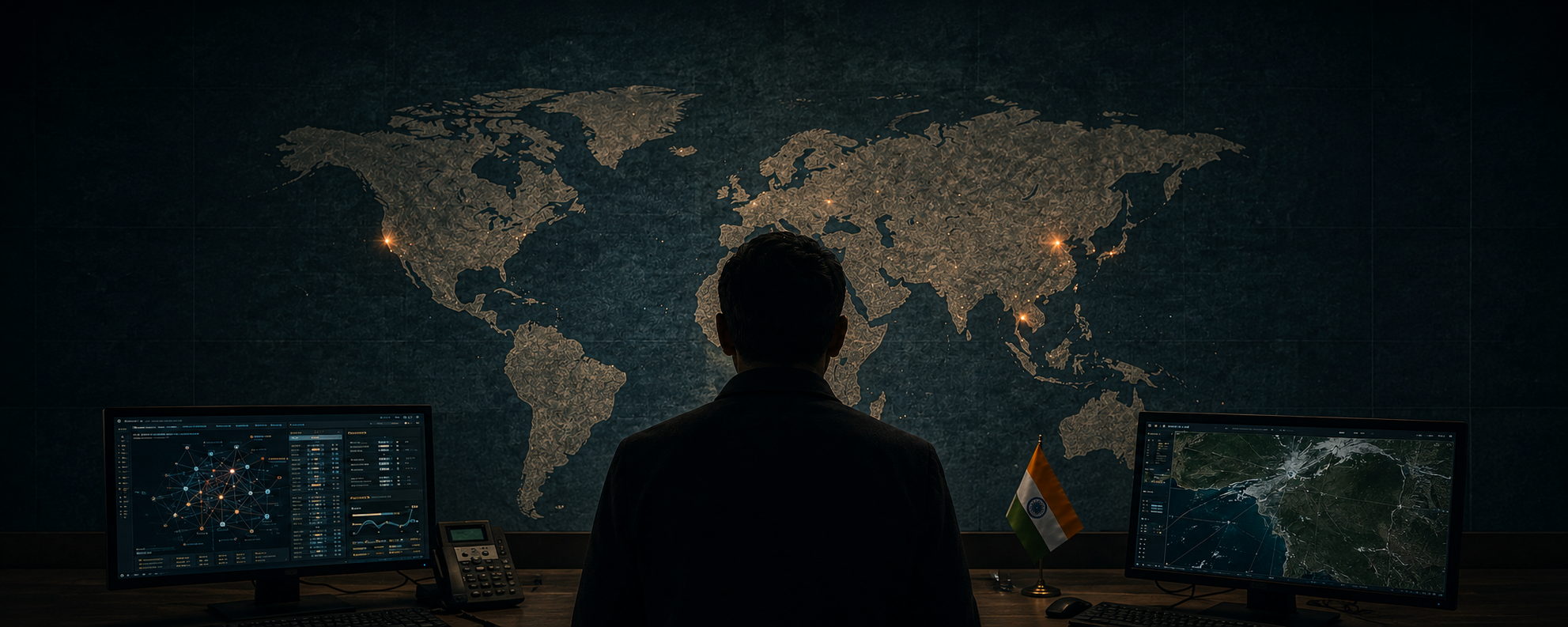
It goes without deliberation that the battlefield of 21st century is not merely soil and sea, it is now, the human mind, the digital nerve, the genome, and the monsoon. India, undoubtedly, stands at the confluence of all four. When Clausewitz described war as the continuation of politics, he presumed a world where armies clashed under daylight and declarations, all designed with the flair of an ink. The erstwhile world has been irrevocably dismantled. The battles and conflicts knocking at the Lutyens are no more announced. They do not begin at dawn. The new warfare seeps through optic cables at odd hours, flocks with the migratory birds, circulate as a viral link and percolate silently into the aquifers of border areas. As India revolves its stratagem of security, it needs to neatly tiptoe among seven critical forms of modern warfare. Cyber, Biological, Cognitive-Informational and Psychological, Economic coercion, climate weaponization, grey-zone aggression, proxy and terror financing webs, space wars and militarization of undersea infrastructure are key domains, dangling at the firing charts of India’s adversaries. Collectively these twigs of a larger deleterious infrastructure, unfortunately, do not face a unified defence structure, as no parliamentary committee or regimental headquarters fully immerse into the expertise of unconventional thwart.
The 2020 SolarWinds cyberattack compromised over 18,000 organisations despite no missile firing or transborder military movement. It was an attack with an immeasurable damage. India, owing to its digital mission, swims in the risky haystack of managing its 1.4 billion digital identities and rapidly expanding digital infrastructure. Usurping the knowledge and expertise in unconventional defence, hence, lies central to India’s security capacity.
Ancient Strategic Thought and Contemporary Threats
The ancient Indian lenses to modern threats serve as the athenaeum of revolutionary strategies.This repository is not impoverished, rather underutilized. Kautilya’s Arthashastra, composed over two millennia ago, categorized into four types: prakasha yuddha (open war), kuta yuddha (concealed war), tushnim yuddha (silent war) and vitatha yuddh (factional war). The last three strikingly resonate to modern hybrid warfare doctrines. A direct precursor to what modern analysts call as the fifth-column operations are analogous to erstwhile shodhanshala (the covert intelligence cells) beautifully adopted by China’s United Front Work Department. The Mahabharata’s chakravyuh amplifies the idea of a layered cyber intrusion architectures where an adversary knows how to enter the network, but fails to exit. With the emergence of commercial tools like Mythos, an unimaginable range of ideas yet to be propped wait in the embargo for the critical vulnerabilities of India’s digital system, from CoWIN to UPI and farther. India’s autonomy is often misread as fence-sitting is de-facto rooted in its civilizational wisdom. However, the challenge lies in institutionalizing it without succumbing to strategic ambiguity that adversaries tend to exploit.
India’s Cyber Vulnerability and Institutional Gaps
Cyber Warfare is undoubtedly India’s most urgent vulnerability. The Check Point Research’s 2024 Threat Intelligence Report, India experienced the maximum number of cyberattacks per organization per week, averaging over 2100 weekly attacks, which is a 70 per cent year-on-year rise. India’s National Cyber Security Policy of 2013 is now a historical artefact. Some artefacts do not need mere embellishment, rather a drastic change. The policy India needs must be progressively flexible, unconventionally technical, and strategically sovereign. While the newly constituted Defence Cyber Agency under the IDS is a right direction, but is heavily under-resourced, understaffed, isolated and disconnected from the civilian critical infrastructure protection. Attribution capabilities must be developed domestically, since depending on allied intelligence for cyber attribution compromises strategic sovereignty. Simultaneously, mandatory cyber-hygiene standards for all critical infrastructure operators ranging from the power grids, financial systems, nuclear facilities, space assets, must be legislated and enforced with criminal accountability.
Biological Warfare and Biosecurity Preparedness
The conundrums of biological warfare still lay unresolved. While the Biological Weapons Convention prohibits the development of biological weapons, it lacks verification and accountability measures. The US DTRA has underlined over 12 pathogens capable of mass destruction across Eurasia. Such developments are concerning for India which stands resolute with porous borders. It makes biosurveillance a front-line defence imperative. A strategic intervention of unifying the National Biosecurity Architecture, by integrating DRDE, ICMR, NCDC and the state health labs is a requirement overdue.
Cognitive Warfare and Information Manipulation
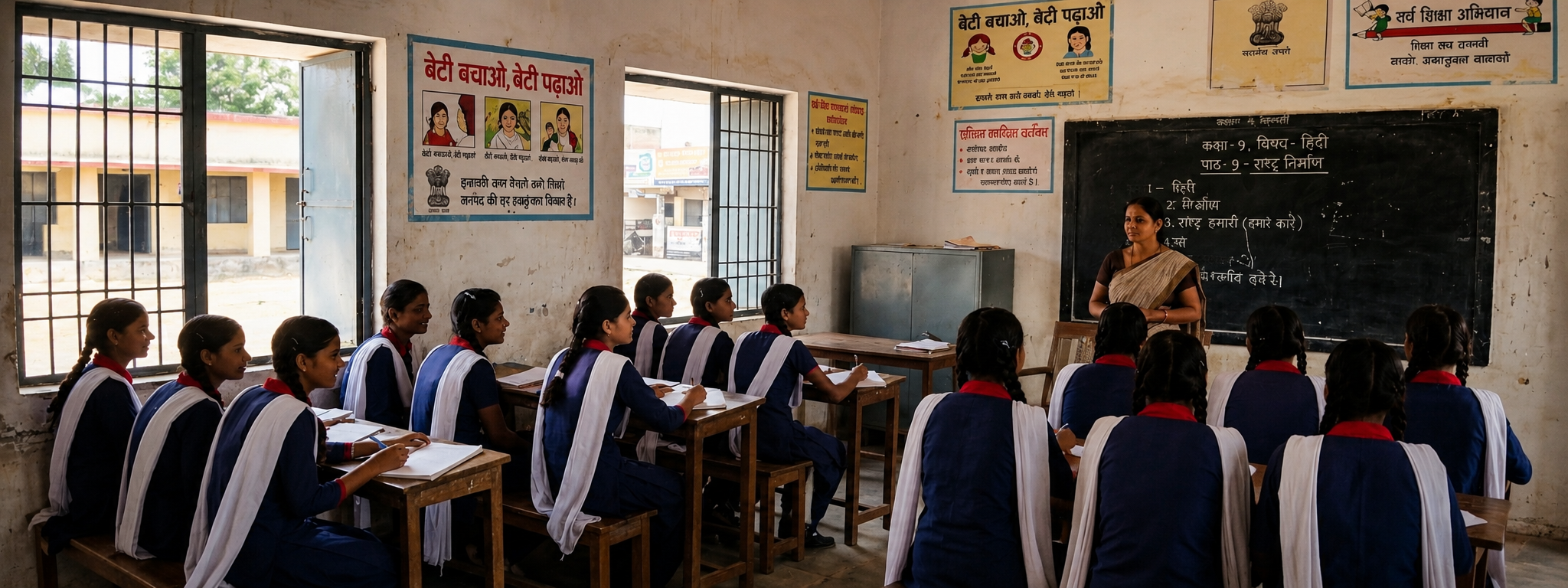
BBBP’s outcomes record is considerably weaker even on its primary stated metric of improving the Child Sex Ratio (CSR) and Sex Ratio at Birth (SRB). CAG reports for Haryana and Punjab identified SRB deterioration in multiple scheme districts relative to baseline values. In Panipat, Haryana, which had the distinction of being the site of BBBP’s inaugural launch ceremony, the SRB fell from 892 to 881 against a programme target of 902 (The Wire 2017). The sex ratio at birth nationally improved marginally from 919 to 927 per 1,000 male births between NFHS-4 and NFHS-5, but attribution to BBBP is highly contested given the simultaneous operation of multiple state and national programmes targeting gender equity, judicial enforcement of the Pre-Conception and Pre-Natal Diagnostic Techniques (PCPNDT) Act, and broader secular trends in fertility transition. The Parliamentary Standing Committee on Human Resource Development reported that in the financial year 2016-17, only Rs. 5 crore of the Rs. 43 crore total allocation for BBBP was properly utilised, a figure suggesting institutional dysfunction extending well beyond advertising skewness (Wikipedia 2025).
China and the Logic of Long-Term Strategic Competition
The Indo-China confrontation never leaves the South Block. This unique long-lost war is not merely a civilizational confrontation between two horizon strategic cultures, but also one that has internalized Sun Tzu’s doctrine of winning without fighting. It faces an unopposed battlefield as an equivalent doctrine has not birthed yet from the Indian cerebral. It is important to note that China expands not only via military but also via economic, infrastructural, demographic, diplomatic and maritime windows. Its sustained obstruction of India’s UNSC permanent membership and blocking entry into Nuclear Suppliers Group is an imperative nuance that the Chinese delegations bet for the borders. India has been long reactive by banning Chinese Apps, accelerated BRO development parallel to the LAC, QUAD’s institutionalization and key bilateral relationships. The proactivity takes a short sight. What India comprehensively needs is a long-range structural China Counter. It must commence with deepening manufacturing supply, cultivating internal contradictions in China’s neighbourhood, building a competitive semiconductor industry, offering a credible alternative to Global South crediting. Essentially a dedicated LAC infrastructure mission should be instituted transparently with regular parliamentary accountability.
Maritime Security and the Indian Ocean
With the waters becoming expository of India’s maritime security, Indian Ocean becomes the repository of concerns. The Indian Ocean is India’s civilizational backyard, historical trade seaway, and a strategic frontier. It is perhaps the arena of utmost complexity and multi-vector security issues persisting in the Indian skies. The cohesion of the Indian Ocean Naval Symposium (IONS) is a valuable soft-power platform, that would dominate the IOR without force, and hence must be extensively refined. Additionally, India requires a third aircraft carrier with more stringent investment in nuclear submarine capability beyond INS Arihant and INS Arighat. Also, the Duqm port, Sittwe Port, and the Sabang Islands, must be infused as logistical and surveillance hubs and expanded horizontally.
Climate Security as National Security
As 98 cities of India throng as the hottest cities of the world, the debate revolving around the nexus of Climate and Weaponry becomes even more important. Iran’s black rain is a proof of how climate change is not merely an environmental crisis, rather a threat multiplier open to exploitation by the adversaries. China’s construction of 87 dams over Brahmputra and its upstream tributaries manifests as an unprecedented hydrological coercion. A calculated and deliberate upstream impoundment could devastate Assam and Bangladesh simultaneously and it is onerous to counter it schematically without adieu. If 17 per cent of the landmass of Bangladesh submerges by 2050, India must prepare for an uninvited refugee flow capable of overwhelming and dismantling local governance and become the transcendental vectors of radicalization and political destabilization. Therefore, India’s climate security policy must integrate the MOEFCC, MHA, NDMA, DRDO, ISRO and the armed forces to construct a unified Climate-Security Task Force, focusing both on climate risk mitigation and climate destruction mitigation with convergence to sustainable security mechanisms.
India at a Strategic Turning Point
India is, in 2026, truly at a turning point in its history. Its economy is the world’s fourth-largest. Its diaspora of 32 million people is the largest that humanity has ever seen. Its democracy, which is messy, raucous, and flawed, is still the world’s largest experiment in self-governance. Its civilization’s wisdom, extending from Chanakya to Ambedkar, is knowledge that no enemy has yet found a way to eradicate. But knowledge alone, without institutions, is emotion. Strategy without capability is vision. Vision without political will is, ultimately, vulnerability. The battles that India will fight will not afford the luxury of waiting until the next election cycle, the next defense budget, or the next parliamentary session. These battles are happening, in the realm of fiber and code and laboratory and discourse, right here, right now. India’s reaction must be proportional – in terms of urgency, sophistication, and boldness.
The wise Kautilya advised his king: ‘Prajasukhe sukham rajnah, prajanam cha hite hitam’ – in the happiness of his subjects lies the king’s happiness; in their welfare, his welfare. The welfare of 1.4 billion Indians, in an era of invisible, borderless, ceaseless warfare, hence requires nothing less than India’s greatest strategic imagination.
References
Ministry of Defence, Government of India. (2024). Annual Report 2023–24. New Delhi: Ministry of Defence. (BRO road construction data; Indian Navy deployment statistics). Read Here
Government of India. (2000). Kargil Review Committee Report (K. Subrahmanyam Committee). New Delhi: Government of India. Read Here
Ministry of Home Affairs, Government of India. (2024). Annual Report 2023–24. New Delhi: Ministry of Home Affairs. (NIA terror financing data). Read Here
Enforcement Directorate, Government of India. (2024). Annual Report 2023–24. New Delhi: Enforcement Directorate. (PMLA attachment figures). Read Here
Indian Navy. (2015). Indian Maritime Security Strategy (IMSS) 2015 — Ensuring Secure Seas. New Delhi: Integrated Headquarters, Ministry of Defence (Navy). Read Here
Ministry of Electronics and Information Technology (MeitY), Government of India. (2013). National Cyber Security Policy 2013. New Delhi: Government of India. Read Here
G20. (2023, September). G20 New Delhi Leaders’ Declaration. Read Here
Tellis, A. J. (2020, June). Hustling in the Himalayas: The Sino-Indian Border Confrontation. Carnegie Endowment for International Peace. Read Here
Mohan, C. Raja. (2012). Samudra Manthan: Sino-Indian Rivalry in the Indo-Pacific. Carnegie Endowment for International Peace / Oxford University Press.
Menon, S. (2016). Choices: Inside the Making of India’s Foreign Policy. Brookings Institution Press.
Subrahmanyam, K. (2005). Shedding Shibboleths: India’s Evolving Strategic Outlook. Wordsmiths.
Institute for Defence Studies and Analyses (IDSA). (2012). Net Security Provider: India’s Out-of-Area Operations. New Delhi: Pentagon Press.
Observer Research Foundation (ORF). (2021). India’s China Challenge: A Festschrift in Honour of Alan Whiting. ORF Occasional Paper.
Vaishnav, M. (Ed.). (2019). The BJP in Power: Indian Democrats and Authoritarian Neighbours. Carnegie Endowment. Read Here
Check Point Research. (2024). 2024 Cyber Security Report. Check Point Software Technologies. Read Here
Indian Computer Emergency Response Team (CERT-In). (2023). Annual Report 2023. MeitY, Government of India. Read Here
Perlroth, N. (2021). This Is How They Tell Me the World Ends: The Cyberweapons Arms Race. Bloomsbury Publishing. (SolarWinds attack analysis, Chapters 18–20).
Healey, J. (Ed.). (2013). A Fierce Domain: Conflict in Cyberspace, 1986 to 2012. Cyber Conflict Studies Association / Atlantic Council.
World Health Organization (WHO). (2016). International Health Regulations (2005) (3rd ed.). Geneva: WHO. Read Here
US Defence Threat Reduction Agency (DTRA). (2023). Chemical and Biological Technologies Department Annual Report. Washington, DC: DTRA.
Koblentz, G. D. (2009). Living Weapons: Biological Warfare and International Security. Cornell University Press.
Indian Council of Medical Research (ICMR). (2024). Annual Report 2023–24. New Delhi: ICMR.
Biological Weapons Convention. (2022). Final Document of the Ninth Review Conference. Geneva: UN Office for Disarmament Affairs.
Stanford Internet Observatory / Graphika. (2023). Impacts of Coordinated Inauthentic Behavior. Stanford. (China-linked influence operations documented reports, available at: cyber.fsi.stanford.edu). Read Here
Roozenbeek, J., & van der Linden, S. (2019). “Fake News Game Confers Psychological Resistance Against Online Misinformation.” Palgrave Communications, 5. Read Here
Indian Army. (2010). Indian Army Doctrine 2004 (Revised 2010). Shimla: HQ Army Training Command. Read Here
National Investigation Agency (NIA). (2023). Annual Report 2023. New Delhi: Ministry of Home Affairs.
Doval, A. (2014–2022). Speeches at Vivekananda International Foundation (VIF) and IDSA on hybrid warfare. Multiple transcripts available at: vifindia.org.
Pant, H. V., & Bommakanti, K. (2019). “India’s National Security: Challenges and Dilemmas.” International Affairs, 95(4), 835–857. Read Here
Brewster, D. (2014). India’s Ocean: The Story of India’s Bid for Regional Leadership. Routledge.
Chellaney, B. (2011). Water: Asia’s New Battleground. Georgetown University Press. (Brahmaputra dam data and hydrological coercion).
Chellaney, B. (2010). String of Pearls: Meeting the Challenge of China’s Rising Power Across the Asian Heartland. Transaction Publishers.
Ministry of External Affairs, Government of India. (2024). Annual Report 2023–24. New Delhi: Ministry of External Affairs. (Neighbourhood First policy, Act East, Quad updates). Read Here
US Department of Defense. (2023). Military and Security Developments Involving the People’s Republic of China 2023. Washington, DC: Office of the Secretary of Defense. (PLAN Indian Ocean deployment data). Read Here
Intergovernmental Panel on Climate Change (IPCC). (2022). Sixth Assessment Report (AR6): Impacts, Adaptation and Vulnerability. Geneva: IPCC. Read Here
Smith, D., & Vivekananda, J. (2007). A Climate of Conflict. International Alert.
National Disaster Management Authority (NDMA). (2019). National Disaster Management Plan 2019. New Delhi: NDMA.
World Bank. (2022). Bangladesh: Shaping a Sustainable Future — Climate and Development Report. Washington, DC: World Bank. (17% submersion projection). Read Here
Tharoor, S. (2012). Pax Indica: India and the World of the 21st Century. Allen Lane / Penguin India.
Raja Mohan, C. (2021). Crossroads: America, China and India’s Future. Brookings Institution Press.
Bhasin, M. (2018). India’s Intelligence Agencies: Problems and Prospects. Vij Books.
Singh, J. (2006). A Call to Honour: In Service of Emergent India. Rupa Publications.
RAAH does not take institutional positions on public policy issues; the views represented herein are those of the author(s) and do not necessarily reflect the views of RAAH.