Analyzing the challenges, access issues, and policy reversals of school consolidation in Sikar district, Rajasthan.
Abstract: This article examines the policy of school merger and demerger in Sikar District, Rajasthan. It seeks to identify the gaps and impacts that prompted the implementation of this policy, as well as the key factors influencing its outcomes. The study adopts a qualitative approach to analyze these dimensions. The findings highlight both the challenges and opportunities associated with school restructuring, offering insights into its effectiveness in improving educational access and quality. The study also provides recommendations for more context-sensitive and sustainable policy implementation.
Introduction
Between 2011–12 and 2017–18, Rajasthan undertook a major process of school consolidation to improve enrolment, strengthen resource use, and make school management more efficient. In the early years of this period, enrolment in elementary schools declined from 130 million to 119 million between FY12 and FY15 (Choudhury, Joshi, & Kumar, 2023).
In 2011–12, the state had 77,833 government elementary schools, which increased slightly to 78,870 in 2012–13. A large proportion of these were small, standalone institutions. Around 56% were primary schools (classes 1–5), while 28% covered classes 1–8. This structure required many students to shift schools after completing class 5 or 8, often leading to disruptions in learning and higher dropout rates. Low enrolment in many schools, especially in areas with multiple institutions located close to each other, further complicated the situation. Administrative challenges also existed, as Block Elementary Education Officers (BEEOs) were responsible for managing a very large number of schools spread across several villages. These issues highlighted the need for better planning and more efficient use of resources (Das, 2023).
To respond to these challenges, the state introduced reforms such as the State Initiative for Quality Education (SIQE), Aadarsh schools, and the consolidation of schools. Over time, a significant number of schools were either merged or closed. While 278 schools were closed in 2012–13, the number rose to 563 in 2013–14, and peaked in 2014–15 with more than 13,000 schools affected. As a result, the total number of public elementary schools declined to 66,753 by 2017–18 (Karimi, 2019). Despite initial difficulties, some improvements were observed. The transition rate from primary to upper primary levels increased from 90% to 95%, and enrolment began to recover after 2014. Administrative efficiency also improved as the number of schools per BEEO decreased.
School Consolidation in Rajasthan
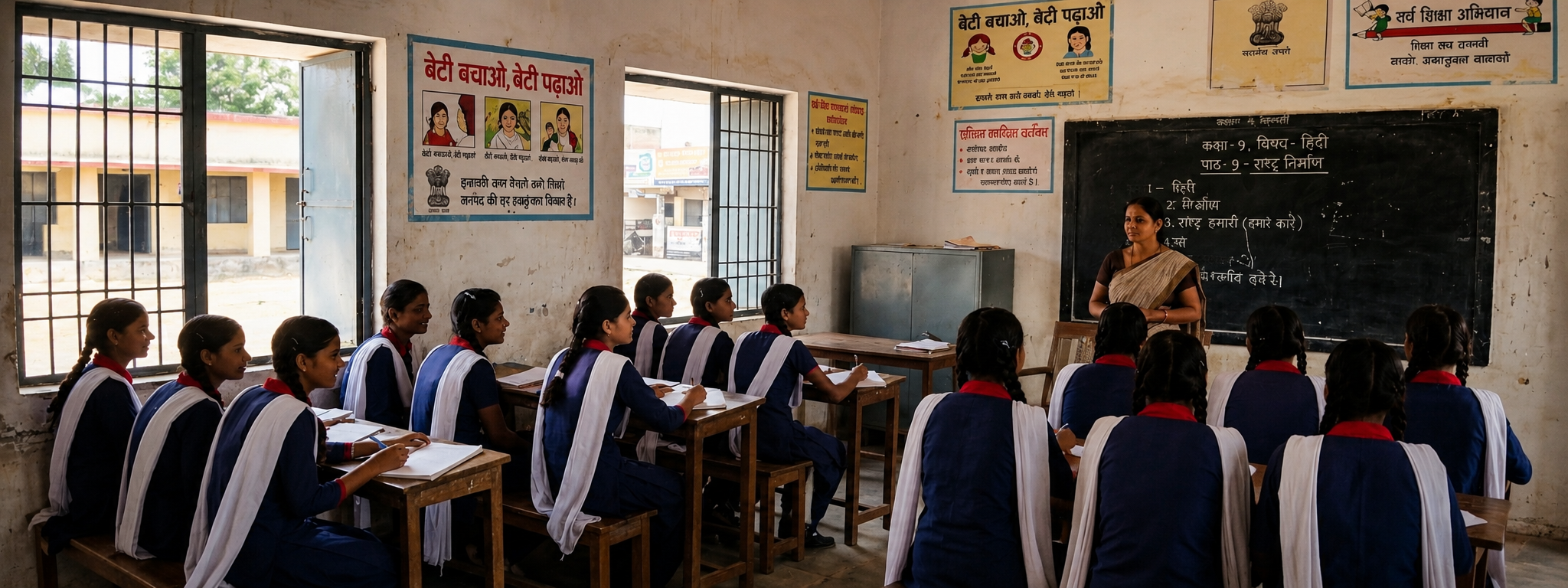
The policy of school consolidation, implemented mainly between 2014 and 2017, aimed to merge smaller schools into larger units so that infrastructure, teachers, and other resources could be used more effectively. Around 22,000 schools were consolidated during this period, including the integration of many primary schools with secondary institutions (Centre for Policy Research, 2018). However, the outcomes of this policy were mixed. While some improvements in efficiency were noted, the expected gains in enrolment and learning outcomes were not fully achieved. Concerns were raised about reduced access to education, particularly for children living in remote areas who now had to travel longer distances. There were also worries about the weakening of community ties with local schools (Scroll.in, 2017).
Recognizing these limitations, later policy approaches such as the National Education Policy (2020) suggested the idea of school complexes, where nearby schools share resources without being fully merged. This model aims to balance efficiency with Accessibility.
Case Study : Sikar District
The experience of Sikar district provides important insights into the implementation of school consolidation. Beginning in 2014, a total of 212 schools were merged across different blocks over four years. However, the distribution of these mergers was uneven. Some areas, such as Dantaramgarh, saw a high number of mergers, while others like Patan experienced very few.
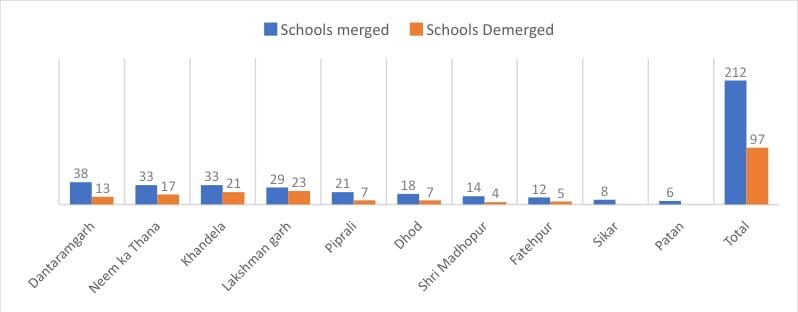
The school mergers in Sikar district were introduced to improve efficiency and make better use of available resources such as buildings, teachers, and facilities. The idea was that combining schools would lead to better management and improved infrastructure. However, in practice, these mergers created several challenges, especially related to access and equity.
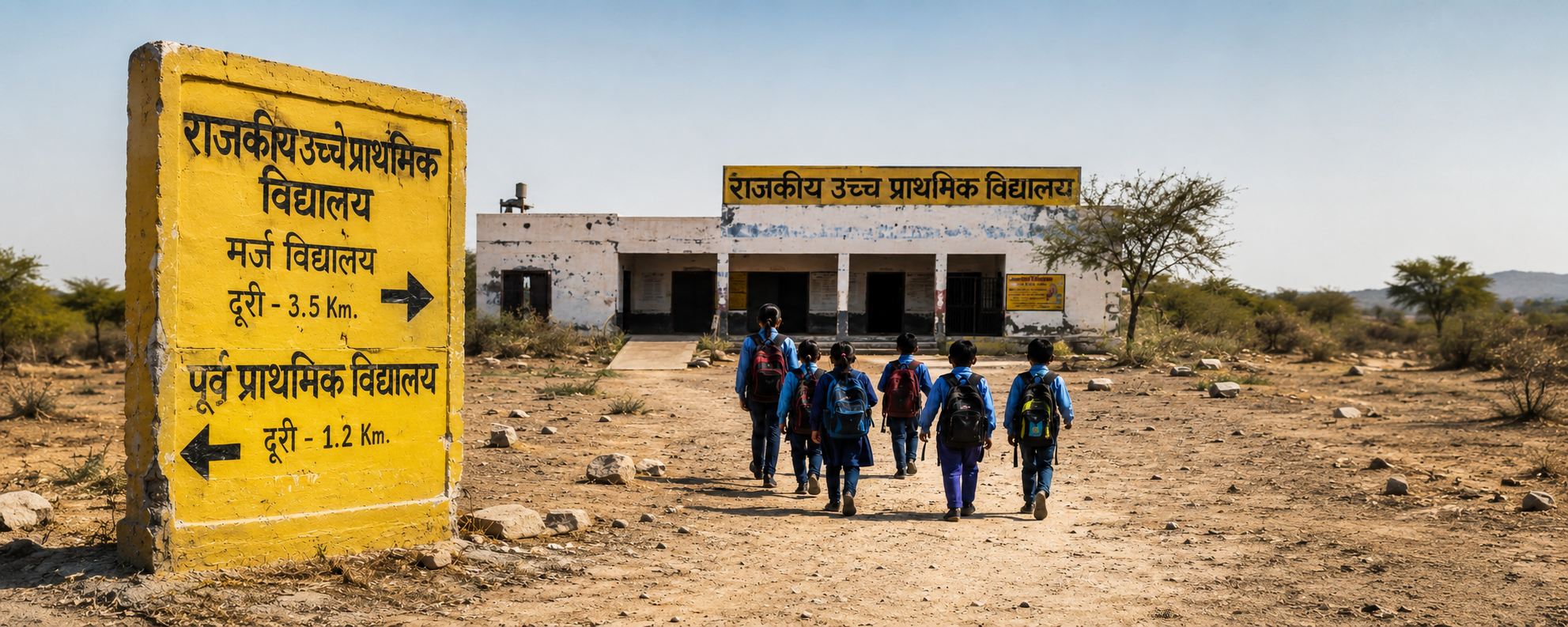
In many cases, students had to travel longer distances to reach the merged schools. This was particularly difficult for younger children and those from rural areas, affecting regular attendance and increasing the chances of dropouts. At the same time, there were concerns about overcrowded classrooms, higher student-teacher ratios, and the overall quality of teaching. These issues raised doubts about whether the mergers were actually benefiting students.
Over time, it became clear that the merger policy had not been carefully planned or effectively implemented. Important local factors, such as distance, transportation, and school capacity, were not fully considered. As a result, the government decided to reverse some of these decisions and began the process of demerging schools from 2014 to 2017.
The table shows the distribution of demerged schools across different blocks in the district. Laxmangarh recorded the highest number with 23 schools, followed by Khandela with 21 and Neem Ka Thana with 17. Overall, 97 schools were demerged across Sikar district during this period.
This reversal clearly highlights weaknesses in planning and decision-making. The need to separate schools after merging them suggests that the original policy did not fully account for its impact on students, teachers, and communities. Even in a relatively well-performing district like Sikar, these challenges affected both access to education and the quality of learning, showing the importance of careful planning and local-level understanding in policy implementation.
Challanges
The process of school consolidation in Rajasthan revealed several important challenges that affected both access to education and the overall effectiveness of the reform. One of the most significant issues was reduced accessibility for students, especially those living in rural and remote areas. When smaller schools were merged into larger ones, many children were required to travel longer distances to attend school. This created practical difficulties for families and increased the likelihood of irregular attendance and dropouts.
Another major concern was the lack of adequate planning in the implementation of the policy. The fact that a large number of schools had to be later demerged suggests that initial decisions were not based on thorough local assessments. This points to gaps in data use, consultation, and long-term planning. The uneven implementation of the policy across regions also created disparities. Some areas experienced a high number of mergers, while others saw very few changes. This imbalance affected the equitable distribution of educational resources and Opportunities.
In addition, the closure or merger of schools had social implications. Schools often serve as important community spaces, and their removal weakened the connection between communities and the education system. Concerns were also raised about changes in teacher deployment and classroom conditions, which in some cases led to overcrowding or reduced attention to individual students.
Finally, despite the scale of the reform, there was limited evidence of significant improvement in learning outcomes. This raised questions about whether consolidation alone is sufficient to improve the quality of education.
Recommendations
To address these challenges, it is important to adopt a more careful and balanced approach to school consolidation. Planning should be based on detailed local data, including factors such as population distribution, distance, and enrolment patterns. This would help ensure that decisions are more context-specific and reduce the chances of policy reversals such as demergers.
Improving accessibility must be a central priority. Where school mergers are necessary, supportive measures such as transportation facilities or residential options for students should be provided to ensure that no child is disadvantaged due to distance.
At the same time, more flexible models like school complexes should be encouraged. Instead of fully merging schools, this approach allows institutions to share resources while maintaining their local presence, thereby balancing efficiency with accessibility. Greater focus is also needed on improving learning outcomes. Investments in teacher training, classroom practices, and monitoring of student performance should accompany structural reforms. Without attention to teaching quality, consolidation alone cannot achieve meaningful improvements in education.
Community participation should be strengthened by involving local stakeholders in decision-making processes. This can help build trust and ensure that policies are better aligned with local needs.
Finally, regular monitoring and evaluation of policies is essential. Continuous assessment allows policymakers to identify problems early and make necessary adjustments. Ensuring equitable distribution of resources, especially in underserved areas, will be crucial for making the education system more inclusive and effective.
Conclusion
The case of school merger and de-merger in Sikar district demonstrates that educational reforms must balance administrative efficiency with equitable access to education. While mergers were intended to optimise resources and improve school functioning, concerns related to accessibility, enrolment, and community needs highlighted important implementation challenges. The decision to de-merge schools reflects the need for policies that are responsive to local realities.
The findings suggest that school reorganisation should be based not only on enrolment data but also on factors such as distance, socio-economic conditions, and stakeholder perspectives. Moving forward, a context-sensitive and consultative approach can help ensure that efforts to improve efficiency do not compromise educational access and inclusion, particularly for students in rural areas.
References
Bery, S., Kapoor, K., & Arcand, J. L. (2025). Navigating Challenges for Sustainable Growth: Insights from the Indian G20 Presidency. Springer Nature.
Choudhury, P. K., Joshi, R., & Kumar, A. (2023). “Regional and Socioeconomic Inequalities in Access to Pre-Primary Education in India: Evidence from a Recent Household Survey.” International Journal of Child Care and Education Policy, 17(1), 13. Read Here
Das, B., & Das, A. (2023). “Is Distance to Secondary School a Barrier to Secondary and Higher Education in India?” Millennial Asia, 14(1), 102–126. Read Here
Karimi, M. N., & Nazari, M. (2021). “Examining L2 Teachers’ Critical Incidents: A Complexity Theoretic Perspective.” Innovation in Language Learning and Teaching, 15(1), 81–98. Read Here
Payal, R. (2020). “School Complexes: Then in 1964–66 and Now in 2019.” International Journal of Education and Management Studies, 10(2), 183–185.
Payal, R. (2022). “Decentralized Administration of School Education in Rural India: A Study of Rajasthan.” Educational Quest, 13(1), 37–43.
Payal, R. (2023). “Panchayat Elementary Education Officer Educational Administrative Decentralisation in Rajasthan.” Journal of Indian Education, 49(1), 82–92.
Scroll Staff. (2022, September 15). “India’s Mass Closure of Schools Is Leaving Lakhs of Students Stranded.” Scroll.in. Read Here
RAAH does not take institutional positions on public policy issues; the views represented herein are those of the author(s) and do not necessarily reflect the views of RAAH.
About the Author

More from RAAH
Vision for Advancing and Anchoring Productive Sending of Income (VAAPSI)
This policy brief examines India’s remittance economy and proposes a structural policy framework to redirect remittance inflows toward productive investment.


 Divyansh Shah, Radhika Jain, Simin Sanil
Powering Households or Deepening Inequality? An Analysis of PM-Surya Ghar Muft Bijli Yojana
Examining the implementation gaps, equity concerns, and institutional challenges within India’s flagship rooftop solar initiative.
 Neharika Gupta
An Evaluation of India’s ‘Millet Strategy’
India’s push to reposition millets as “smart foods” and climate-resilient crops has emerged as a significant component of its agricultural and food-security strategy.
Divyansh Shah
An Indian Reckoning to Modern Warfare Stratagems
Abstract: As warfare increasingly expands beyond conventional battlefields into cyber networks, information ecosystems, climate systems, and biological domains, India’s security architecture faces unprecedented challenges. This article…
 Priyal Jain
Closing the Gig Gap : Why and How Should Policymakers Intervene to Boost Women’s Participation in the Gig Economy?
India’s gig economy has expanded rapidly over the past decade and is projected to grow further.

 Nikita Singh, Bhaskar Agarwal